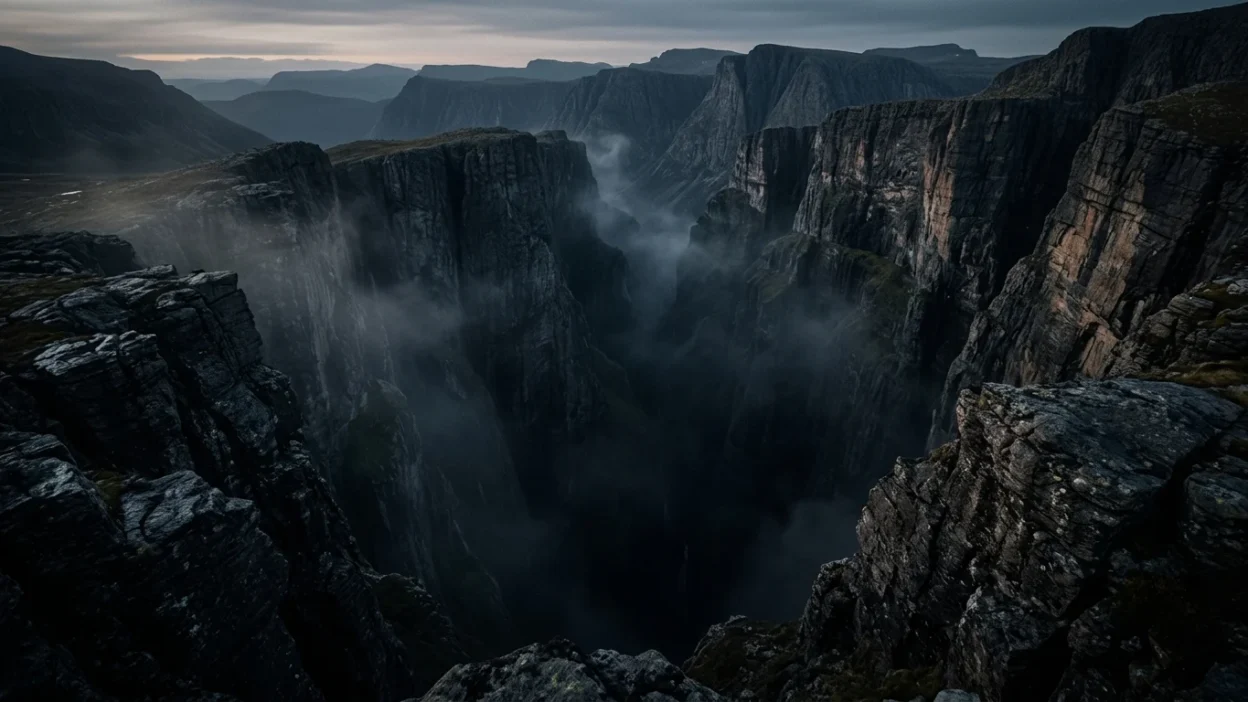
The word abyss describes something extremely deep, vast, or seemingly bottomless. It is often used for a deep hole or chasm, but it can also describe a feeling of emptiness, hopelessness, or a huge separation between things.
For students, ESL learners, writers, and content creators, learning synonyms for abyss can make descriptions more vivid and precise. Depending on the context, words such as chasm, void, gorge, pit, depth, and ravine can express different shades of meaning.
• What Does Abyss Mean?
Abyss means a very deep space, hole, or area that seems to have no bottom.
It can also have a figurative meaning, describing a situation that feels extremely difficult, empty, or hopeless.
Examples:
- The explorers stood at the edge of a dark abyss.
- He felt as though he were falling into an emotional abyss.
- A vast abyss separated the two opposing ideas.
• Chasm
Meaning: A very deep, wide gap in the ground or between two things.
Example: A narrow bridge crossed the enormous chasm.
Best used for: Physical gaps, landscapes, and figurative divisions.
• Void
Meaning: A completely empty space or an absence of something.
Example: She felt a deep void after losing her closest friend.
Best used for: Emotional, philosophical, and abstract contexts.
• Gorge
Meaning: A deep, narrow valley with steep sides, usually formed by a river.
Example: The hikers carefully walked through the rocky gorge.
Best used for: Landscapes and geographical descriptions.
• Ravine
Meaning: A deep, narrow valley with steep sides.
Example: The path led down into a dark ravine.
Best used for: Nature, hiking, and geographical writing.
• Pit
Meaning: A deep hole in the ground.
Example: The workers discovered a deep pit near the old building.
Best used for: Simple and everyday descriptions.
• Depth
Meaning: The distance from the top or surface to the bottom of something.
Example: The depth of the cave was difficult to measure.
Best used for: Water, caves, measurements, and figurative ideas.
• Chasm
Meaning: A large separation or deep gap.
Example: A political chasm had developed between the two groups.
Best used for: Physical and figurative divisions.
• Gulf
Meaning: A large gap or difference between people, ideas, or situations.
Example: A gulf separated the wealthy and the poor communities.
Best used for: Figurative differences and geographical features.
• Canyon
Meaning: A deep valley with steep sides, often formed by a river.
Example: The river flowed through the enormous canyon.
Best used for: Landscapes and travel writing.
• Crevasse
Meaning: A deep crack or opening, especially in a glacier.
Example: The climber carefully avoided the dangerous crevasse.
Best used for: Glaciers, mountains, and technical writing.
• Hollow
Meaning: A low or empty area surrounded by higher ground.
Example: Mist covered the quiet hollow below the hills.
Best used for: Nature and literary descriptions.
• Trench
Meaning: A long, deep, narrow ditch or depression.
Example: The researchers explored a deep ocean trench.
Best used for: Geography, oceans, construction, and military contexts.
• Depression
Meaning: An area of land that is lower than the surrounding land.
Example: Rainwater collected in the natural depression.
Best used for: Geography and scientific writing.
• Sinkhole
Meaning: A hole or depression that forms when the ground collapses.
Example: A large sinkhole appeared after heavy rainfall.
Best used for: Geology and natural disasters.
• Cavern
Meaning: A large cave or underground chamber.
Example: The explorers entered a vast underground cavern.
Best used for: Caves, adventure writing, and geography.
• Chasmic Depth
Meaning: An extremely deep or seemingly bottomless space.
Example: The diver disappeared into the chasmic depths.
Best used for: Literary and dramatic descriptions.
• Bottomless Pit
Meaning: A place or space that seems to have no bottom.
Example: The abandoned mine looked like a bottomless pit.
Best used for: Dramatic and figurative writing.
• Deep
Meaning: Extending far downward or inward.
Example: They looked into a deep opening beneath the rocks.
Best used for: Simple everyday English.
• Abyssal Depth
Meaning: An extremely deep area, especially one associated with the deep ocean.
Example: Strange creatures live in the abyssal depths of the ocean.
Best used for: Oceanography and scientific writing.
• Immensity
Meaning: Extremely great size or vastness.
Example: The immensity of the dark space was frightening.
Best used for: Figurative and descriptive writing.
• Expanse
Meaning: A large, wide, open area.
Example: They gazed across the endless expanse of the ocean.
Best used for: Landscapes, oceans, and literary writing.
• Chasm of Emptiness
Meaning: A figurative space representing extreme emptiness.
Example: He struggled to overcome the chasm of emptiness inside him.
Best used for: Emotional and creative writing.
• Nothingness
Meaning: A state in which nothing exists or can be perceived.
Example: The character stared into the darkness of nothingness.
Best used for: Philosophical and literary writing.
• Oblivion
Meaning: A state of being forgotten, destroyed, or completely unaware.
Example: The ancient civilization disappeared into oblivion.
Best used for: Literary, dramatic, and philosophical writing.
• Darkness
Meaning: The absence of light; figuratively, it can represent despair or uncertainty.
Example: He felt as though he were descending into darkness.
Best used for: Literary and emotional writing.
• Desolation
Meaning: A state of complete emptiness, loneliness, or abandonment.
Example: The abandoned village was filled with a sense of desolation.
Best used for: Emotional and descriptive writing.
• Emptiness
Meaning: A complete lack of something or a feeling that something is missing.
Example: She experienced a painful sense of emptiness.
Best used for: Emotional and everyday writing.
• Abyss
Meaning: An extremely deep space or a profound figurative emptiness.
Example: The climber stared nervously into the abyss.
Best used for: Dramatic, literary, and figurative writing.
• Precipice
Meaning: A very steep or vertical cliff, often with a dangerous drop.
Example: They stood carefully near the edge of the precipice.
Best used for: Dramatic landscapes and figurative writing.
• Chute
Meaning: A steep passage through which something can fall or move downward.
Example: The rocks tumbled down the narrow chute.
Best used for: Physical structures and technical descriptions.
• Depths
Meaning: The deepest parts of something.
Example: The creature disappeared into the depths of the ocean.
Best used for: Oceans, caves, emotions, and literary writing.
Comparison Guide: When to Use Different Synonyms
| Word | Main Meaning | Best Context |
|---|---|---|
| Chasm | Deep, wide gap | Physical or figurative |
| Void | Empty space | Emotional or abstract |
| Gorge | Deep narrow valley | Nature |
| Ravine | Narrow deep valley | Geography |
| Pit | Deep hole | Everyday use |
| Gulf | Large separation | Figurative or geographical |
| Canyon | Deep-sided valley | Nature and travel |
| Crevasse | Deep crack | Glaciers |
| Trench | Long deep depression | Ocean or technical |
| Cavern | Large underground space | Caves |
| Precipice | Steep cliff edge | Dramatic descriptions |
| Oblivion | State of being forgotten | Literary |
| Nothingness | Complete absence | Philosophical |
| Expanse | Vast open area | Landscapes |
| Depths | Deepest parts | Ocean and literary writing |
• How to Choose the Right Synonym
• For a Physical Deep Place
Use:
- Chasm
- Gorge
- Ravine
- Pit
- Canyon
- Cavern
- Trench
These words work when describing actual geographical or physical formations.
• For Emotional Emptiness
Use:
- Void
- Emptiness
- Darkness
- Desolation
- Nothingness
These are useful when describing grief, loneliness, despair, or emotional struggles.
• For a Large Separation
Use:
- Gulf
- Chasm
- Divide
- Distance
- Separation
These work well when discussing differences between people, groups, opinions, or situations.
• For Literary and Dramatic Writing
Use:
- Abyss
- Oblivion
- Nothingness
- Precipice
- Depths
- Darkness
These words create a stronger emotional or mysterious atmosphere.
• For Scientific or Geographical Writing
Use:
- Trench
- Crevasse
- Ravine
- Gorge
- Canyon
- Depression
- Sinkhole
These terms provide greater physical and technical accuracy.
• Abyss vs Void
Although abyss and void can both suggest emptiness, they emphasize different ideas.
An abyss usually suggests extreme depth, while a void emphasizes absence or emptiness.
- The explorer stared into the abyss.
- She felt a painful void inside her.
Therefore, choose abyss when depth or danger is important and void when emptiness is the main idea.
• Abyss vs Chasm
A chasm usually describes a deep gap or opening, while an abyss can suggest something even more mysterious, vast, or seemingly bottomless.
- A deep chasm divided the mountain.
- The ship disappeared into the abyss.
Both can work figuratively, but abyss often has a stronger emotional or dramatic effect.
• Abyss vs Gorge
A gorge is specifically a deep, narrow valley with steep sides, often created by flowing water. An abyss is much broader and does not require a particular geological formation.
For example:
The river flowed through a spectacular gorge.
But:
The climber looked down into the dark abyss.
• Common Mistakes When Using Synonyms for Abyss
Not every synonym can replace abyss in every sentence.
- Use gorge for a specific type of geographical valley.
- Use crevasse for a deep crack, especially in ice.
- Use trench for a long, narrow depression.
- Use void when emphasizing emptiness rather than physical depth.
- Use precipice for a steep cliff or dangerous edge.
- Use oblivion when referring to being forgotten or completely lost.
Choosing the synonym according to context will make your writing much more accurate.
• Final Thoughts
Learning synonyms for abyss gives you powerful ways to describe deep spaces, dangerous drops, emotional emptiness, and enormous separations.
Words such as chasm, void, gorge, ravine, gulf, pit, canyon, cavern, precipice, and oblivion each carry a different shade of meaning.
By considering whether you are describing a physical place, emotional state, or figurative idea, you can choose the synonym that makes your writing clearer, stronger, and more vivid.

Lawrence Dominic is an experienced SEO content writer and digital publishing professional specializing in creating informative, well-researched, and search-optimized articles. He combines in-depth research with strong editorial standards to produce engaging content across a wide range of topics. His writing focuses on accuracy, readability, and delivering meaningful value to readers. Lawrence is committed to publishing high-quality content that aligns with modern SEO best practices and evolving search trends.