
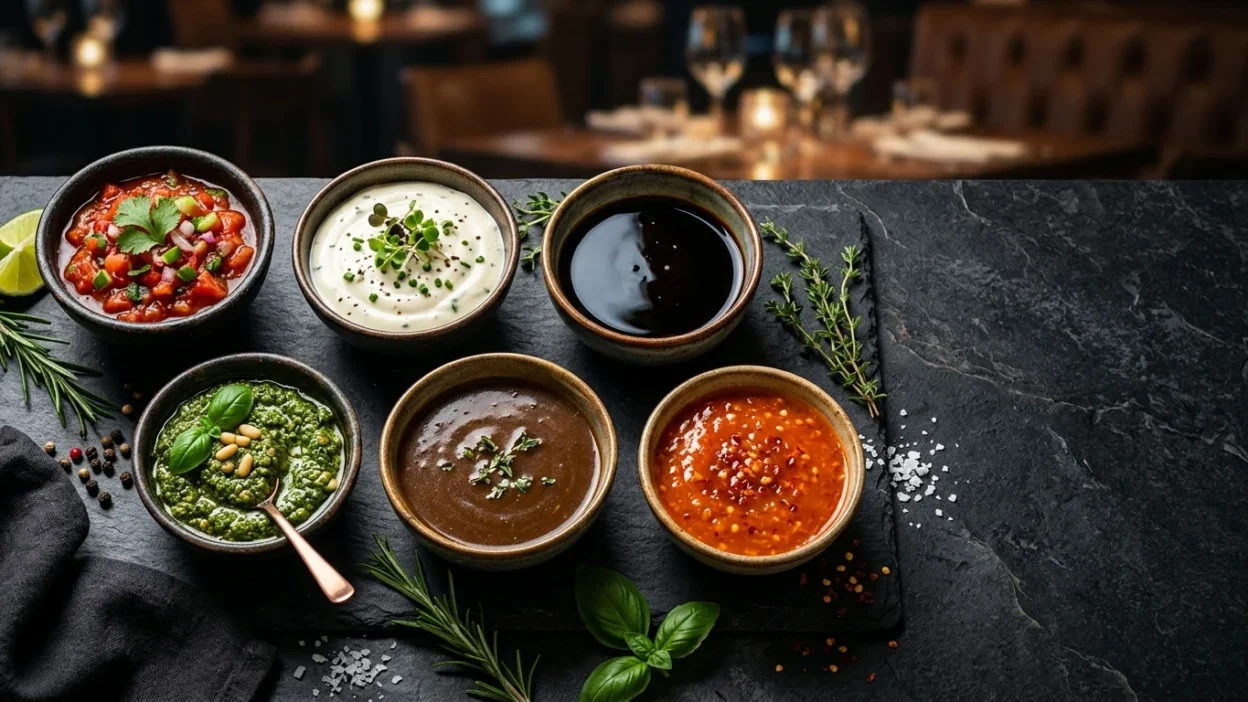
The word sauce refers to a liquid, creamy, or semi-liquid food mixture that is added to meals to provide flavor, moisture, texture, or richness. Sauces are used with foods such as pasta, meat, vegetables, rice, seafood, and desserts.
For students, ESL learners, writers, and content creators, learning synonyms for sauce can make food-related writing more descriptive and interesting. However, the best alternative depends on the type of sauce and how it is used.
• What Does “Sauce” Mean?
Sauce means a liquid or semi-liquid mixture served with food to add flavor, moisture, or texture.
Examples:
- The pasta was served with a creamy tomato sauce.
- Add some sauce to the grilled chicken.
- The chef prepared a spicy sauce for the dish.
• Gravy
Meaning: A savory liquid usually made from meat juices, stock, or other ingredients.
Example: The mashed potatoes were covered in rich gravy.
Best usage context: Meat dishes, potatoes, and traditional meals.
• Dressing
Meaning: A liquid or creamy mixture added to salads or other foods.
Example: She poured a light dressing over the salad.
Best usage context: Salads and cold dishes.
• Dip
Meaning: A thick sauce used for dipping food into.
Example: We served the vegetables with a creamy dip.
Best usage context: Snacks, appetizers, vegetables, and chips.
• Condiment
Meaning: A food product added to a meal to improve its flavor.
Example: Mustard is a popular condiment for sandwiches.
Best usage context: Burgers, sandwiches, fast food, and general food writing.
• Topping
Meaning: Food placed on top of another food.
Example: The chocolate topping made the dessert even richer.
Best usage context: Desserts, pizza, breakfast foods, and casual food writing.
• Puree
Meaning: Food that has been blended into a smooth, thick mixture.
Example: The chef served the fish with a smooth vegetable puree.
Best usage context: Fine dining, vegetables, and culinary writing.
• Coulis
Meaning: A thin sauce made from pureed fruits or vegetables.
Example: The dessert was decorated with a raspberry coulis.
Best usage context: Fine dining and professional culinary writing.
• Reduction
Meaning: A sauce made by cooking liquid until it becomes thicker and more concentrated.
Example: The steak was served with a rich red-wine reduction.
Best usage context: Professional cooking and fine dining.
• Marinade
Meaning: A seasoned liquid used to flavor food before cooking.
Example: The chicken was left in a garlic marinade overnight.
Best usage context: Meat, seafood, grilling, and cooking instructions.
• Paste
Meaning: A thick mixture made from crushed or blended ingredients.
Example: The chef added a spicy chili paste to the noodles.
Best usage context: Asian, Mediterranean, and spicy dishes.
• Spread
Meaning: A soft or creamy food applied over another food.
Example: She added a garlic spread to the warm bread.
Best usage context: Bread, sandwiches, snacks, and appetizers.
• Relish
Meaning: A seasoned mixture, often made from chopped vegetables or fruits.
Example: The hot dog was topped with sweet pickle relish.
Best usage context: Hot dogs, burgers, sandwiches, and barbecue food.
• Salsa
Meaning: A usually spicy mixture of chopped vegetables, fruits, herbs, and seasonings.
Example: We served fresh tomato salsa with the tortilla chips.
Best usage context: Mexican-inspired dishes, chips, tacos, and appetizers.
• Vinaigrette
Meaning: A dressing made mainly from oil and vinegar.
Example: The chef prepared a lemon vinaigrette for the salad.
Best usage context: Salads and vegetables.
• Aioli
Meaning: A thick, creamy sauce traditionally made with garlic and oil.
Example: The fries were served with garlic aioli.
Best usage context: Seafood, fries, sandwiches, and modern cuisine.
• Mayonnaise
Meaning: A thick, creamy sauce made primarily from oil and eggs.
Example: She added mayonnaise to the sandwich.
Best usage context: Sandwiches, salads, burgers, and dips.
• Ketchup
Meaning: A sweet and tangy tomato-based condiment.
Example: He added ketchup to his fries.
Best usage context: Burgers, fries, sandwiches, and casual meals.
• Mustard
Meaning: A tangy condiment made from mustard seeds.
Example: She spread mustard on the sandwich.
Best usage context: Sandwiches, sausages, burgers, and dressings.
• Glaze
Meaning: A thin coating that adds flavor and shine to food.
Example: The chicken was covered in a sweet honey glaze.
Best usage context: Meat, vegetables, pastries, and desserts.
• Syrup
Meaning: A thick, sweet liquid used to flavor or top food.
Example: He poured maple syrup over the pancakes.
Best usage context: Pancakes, waffles, desserts, and sweet dishes.
• Custard
Meaning: A thick, creamy mixture made with milk or cream and eggs.
Example: The cake was served with warm vanilla custard.
Best usage context: Desserts and sweet dishes.
• Cream
Meaning: A rich, smooth liquid or mixture used to add flavor and texture.
Example: The pasta was served with a garlic cream sauce.
Best usage context: Pasta, desserts, soups, and rich dishes.
• Broth
Meaning: A flavorful liquid made by cooking meat, vegetables, or other ingredients in water.
Example: The noodles were served in a flavorful broth.
Best usage context: Soups, noodles, and savory dishes.
• Jus
Meaning: A thin, flavorful sauce made from the natural juices of cooked meat.
Example: The roast beef was served with a rich jus.
Best usage context: Fine dining and culinary writing.
• Salsa Verde
Meaning: A green sauce usually made with herbs, green vegetables, or tomatillos.
Example: The grilled fish was served with fresh salsa verde.
Best usage context: Mexican-inspired and Mediterranean-style dishes.
• Chutney
Meaning: A thick, flavorful mixture often made from fruits, vegetables, spices, and vinegar.
Example: Mango chutney added a sweet and spicy flavor to the meal.
Best usage context: South Asian cuisine and savory dishes.
• Pesto
Meaning: A thick Italian sauce traditionally made with basil, nuts, cheese, garlic, and oil.
Example: She tossed the pasta with fresh basil pesto.
Best usage context: Pasta, sandwiches, salads, and Italian cuisine.
• Dip Sauce
Meaning: A sauce specifically prepared for dipping food.
Example: The restaurant served a spicy dip sauce with the fried snacks.
Best usage context: Appetizers and snacks.
• Seasoning
Meaning: An ingredient or mixture used to add flavor to food.
Example: The chef used a special seasoning mixture for the vegetables.
Best usage context: General cooking; not always a direct synonym for sauce.
• Comparison Guide
| Word | Main Meaning | Best Context |
|---|---|---|
| Gravy | Savory meat-based liquid | Meat and potatoes |
| Dressing | Sauce for salads | Salads |
| Dip | Thick sauce for dipping | Snacks |
| Condiment | Flavor enhancer | Burgers and sandwiches |
| Topping | Food placed on top | Desserts and pizza |
| Puree | Smooth blended mixture | Fine dining |
| Coulis | Thin fruit or vegetable sauce | Desserts |
| Reduction | Concentrated cooked sauce | Fine dining |
| Marinade | Liquid used before cooking | Meat and seafood |
| Paste | Thick blended mixture | Spicy dishes |
| Relish | Seasoned chopped mixture | Burgers and hot dogs |
| Salsa | Fresh, often spicy mixture | Mexican-style food |
| Vinaigrette | Oil-and-vinegar dressing | Salads |
| Glaze | Shiny flavorful coating | Meat and desserts |
| Syrup | Thick sweet liquid | Pancakes and desserts |
| Chutney | Spiced fruit or vegetable mixture | South Asian cuisine |
| Pesto | Herb-based Italian sauce | Pasta |
• Common Mistakes When Using Synonyms for Sauce
Not every alternative is a direct replacement.
- Gravy usually refers to a savory sauce, often associated with meat.
- Marinade is used before cooking rather than simply served with food.
- Condiment is a broader category that includes many sauces.
- Topping refers to anything placed on top of food.
- Dressing is most commonly associated with salads.
- Glaze is usually a coating rather than a traditional pourable sauce.
- Broth is generally thinner than a typical sauce.
Understanding these differences will help you choose the most accurate culinary term.
• Final Thoughts
Learning synonyms for sauce can make food descriptions more flavorful, accurate, and engaging.
Words such as gravy, dressing, dip, condiment, topping, puree, reduction, glaze, chutney, salsa, vinaigrette, and pesto each describe a particular type or use of sauce.
By considering the food, texture, purpose, and culinary style, you can choose the right alternative and make your writing more natural and descriptive.

Lawrence Dominic is an experienced SEO content writer and digital publishing professional specializing in creating informative, well-researched, and search-optimized articles. He combines in-depth research with strong editorial standards to produce engaging content across a wide range of topics. His writing focuses on accuracy, readability, and delivering meaningful value to readers. Lawrence is committed to publishing high-quality content that aligns with modern SEO best practices and evolving search trends.