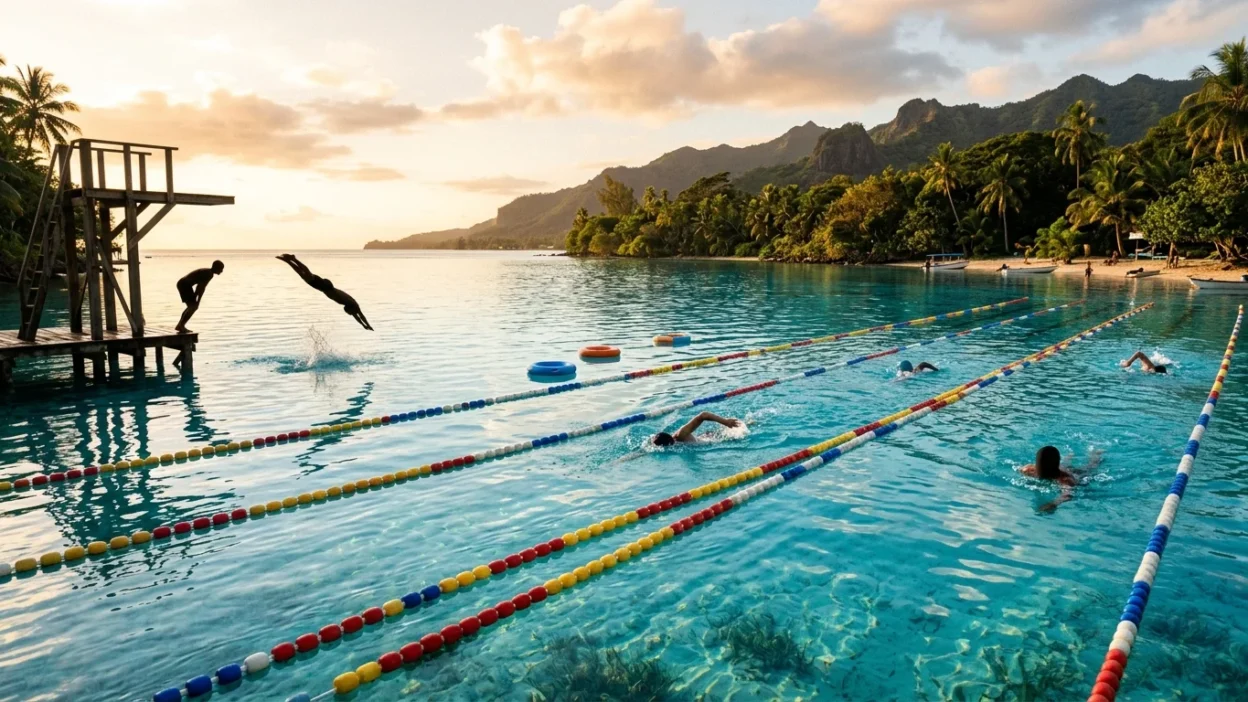
Swimming is one of the most common actions described in English. However, using the word swim repeatedly can make your writing sound repetitive. Learning different synonyms for swim helps you describe movement in water more accurately and creatively.
Whether you’re a student, an ESL learner, a writer, or a content creator, understanding these alternatives will improve your vocabulary and make your writing more engaging. Some words describe gentle movement, while others express speed, playfulness, or specific water activities.
What Does “Swim” Mean?
The word swim means to move through water using your arms, legs, or body. Humans, animals, and even some machines can swim depending on the situation.
Simple definition:
To move through water by using body movements.
Example:
- She swims every morning before school.
- Fish swim naturally in rivers and oceans.
Although swim is the standard word, many similar words describe different ways of moving through water.
Why Learn Synonyms for Swim?
Learning alternatives to swim offers several benefits.
- Makes your writing more interesting.
- Expands your English vocabulary.
- Helps you avoid repeating the same word.
- Improves storytelling and creative writing.
- Makes conversations sound more natural.
- Helps ESL learners understand context better.
• Paddle
Meaning: Move through shallow water using your hands or feet.
Example: The children paddled happily near the shore.
Best usage context: Casual swimming, beginners, beaches.
• Float
Meaning: Stay on the surface of the water without sinking.
Example: She floated peacefully in the calm lake.
Best usage context: Relaxing or resting in water.
• Glide
Meaning: Move smoothly and gracefully through water.
Example: The swan glided across the lake.
Best usage context: Elegant or effortless movement.
• Dive
Meaning: Jump or move headfirst into water.
Example: He dived into the swimming pool.
Best usage context: Entering water or underwater sports.
• Wade
Meaning: Walk through shallow water.
Example: We waded across the small stream.
Best usage context: Rivers, beaches, and shallow ponds.
• Drift
Meaning: Move slowly with the water current.
Example: The boat drifted down the river.
Best usage context: Natural water movement.
• Splash
Meaning: Move around while throwing water.
Example: The kids splashed around all afternoon.
Best usage context: Fun and playful situations.
• Tread Water
Meaning: Stay in one place while keeping yourself above water.
Example: She treaded water until the lifeguard arrived.
Best usage context: Swimming lessons and safety.
• Plunge
Meaning: Jump quickly into water.
Example: They plunged into the cool river.
Best usage context: Sudden entry into water.
• Submerge
Meaning: Go completely underwater.
Example: The submarine submerged beneath the waves.
Best usage context: Diving or technical writing.
• Immerse
Meaning: Put something completely into water.
Example: Immerse the vegetables in cold water.
Best usage context: Formal writing or instructions.
• Frolic
Meaning: Play happily in or around water.
Example: Dolphins frolicked near the beach.
Best usage context: Fun and playful descriptions.
• Skim
Meaning: Move lightly across the water’s surface.
Example: The bird skimmed over the lake.
Best usage context: Birds or light movement.
• Coast
Meaning: Move smoothly with little effort.
Example: The kayak coasted along the river.
Best usage context: Calm travel on water.
• Row
Meaning: Move a boat using oars.
Example: They rowed across the lake before sunset.
Best usage context: Boating.
• Propel
Meaning: Push yourself forward through water.
Example: Strong kicks propelled the swimmer ahead.
Best usage context: Competitive swimming.
• Stroke
Meaning: Move through water using swimming techniques.
Example: Her freestyle stroke impressed the coach.
Best usage context: Swimming instruction.
• Surf
Meaning: Ride ocean waves on a surfboard.
Example: They surfed every weekend during summer.
Best usage context: Water sports.
• Snorkel
Meaning: Swim while using a snorkel to breathe.
Example: We snorkeled around the coral reef.
Best usage context: Underwater exploration.
• Scull
Meaning: Move through water using short rowing motions.
Example: She sculled the small boat across the pond.
Best usage context: Rowing and boating.
• Sweep
Meaning: Move powerfully through water.
Example: The whale swept through the ocean.
Best usage context: Large sea animals.
• Stream
Meaning: Move together smoothly like flowing water.
Example: Fish streamed upstream every spring.
Best usage context: Groups of fish or animals.
• Cruise
Meaning: Travel comfortably across water.
Example: The yacht cruised along the coastline.
Best usage context: Leisure boating.
• Navigate
Meaning: Travel through water by following a route.
Example: The captain navigated the narrow channel.
Best usage context: Ships and professional sailing.
• Sail
Meaning: Travel over water in a boat or ship.
Example: They sailed across the bay.
Best usage context: Boats and ships.
• Meander
Meaning: Move slowly without a fixed direction.
Example: We meandered through the peaceful river.
Best usage context: Relaxed water journeys.
• Slip
Meaning: Move quietly and smoothly through water.
Example: The seal slipped into the sea.
Best usage context: Silent movement.
• Surge
Meaning: Move forward with great power.
Example: The swimmer surged ahead during the race.
Best usage context: Sports and competition.
• Traverse
Meaning: Cross a body of water.
Example: They traversed the lake by kayak.
Best usage context: Formal writing and travel.
• Navigate Through
Meaning: Make your way across water carefully.
Example: The explorers navigated through the flooded area.
Best usage context: Adventure and exploration.
• Drift Along
Meaning: Move gently with the current.
Example: Leaves drifted along the river.
Best usagecontext: Calm natural movement.
Comparison Guide: When to Use Different Synonyms
| Synonym | Best For | Tone |
|---|---|---|
| Paddle | Beginners, shallow water | Casual |
| Float | Relaxation | Calm |
| Glide | Graceful movement | Descriptive |
| Wade | Walking in water | Everyday |
| Dive | Entering water | Action |
| Splash | Playing | Fun |
| Tread Water | Staying in one place | Practical |
| Propel | Competitive swimming | Athletic |
| Snorkel | Underwater exploration | Recreational |
| Traverse | Crossing water | Formal |
How to Choose the Right Synonym
For Calm and Relaxing Water Movement
Choose:
- Float
- Glide
- Drift
- Coast
- Slip
These words create peaceful and gentle descriptions.
For Fast or Powerful Movement
Choose:
- Propel
- Surge
- Sweep
- Plunge
These words work best for sports and exciting scenes.
For Fun and Recreation
Choose:
- Paddle
- Splash
- Frolic
- Surf
- Snorkel
These are perfect for beaches, holidays, and water activities.
For Formal Writing
Choose:
- Navigate
- Traverse
- Immerse
- Submerge
These fit educational, technical, and professional contexts.
For Creative Writing
Choose:
- Glide
- Drift
- Slip
- Sweep
- Meander
These help create vivid and imaginative descriptions.
Common Mistakes When Using Swim Synonyms
Many English learners assume every synonym has exactly the same meaning. However, each word has its own specific use.
Avoid these common mistakes:
- Using wade when someone is actually swimming.
- Using dive instead of swim after entering the water.
- Using float when someone is actively moving.
- Using sail for people instead of boats.
- Confusing snorkel with regular swimming.
Understanding the context will help you choose the most accurate synonym.
Conclusion
Learning synonyms for swim allows you to describe movement in water with greater accuracy and variety.
While swim remains the most common word, alternatives like glide, float, paddle, dive, and propel add depth to your vocabulary.
By understanding each synonym’s meaning, example, and best usage, you’ll write more naturally, communicate more effectively, and express your ideas with confidence in both everyday English and creative writing.

Lawrence Dominic is an experienced SEO content writer and digital publishing professional specializing in creating informative, well-researched, and search-optimized articles. He combines in-depth research with strong editorial standards to produce engaging content across a wide range of topics. His writing focuses on accuracy, readability, and delivering meaningful value to readers. Lawrence is committed to publishing high-quality content that aligns with modern SEO best practices and evolving search trends.