
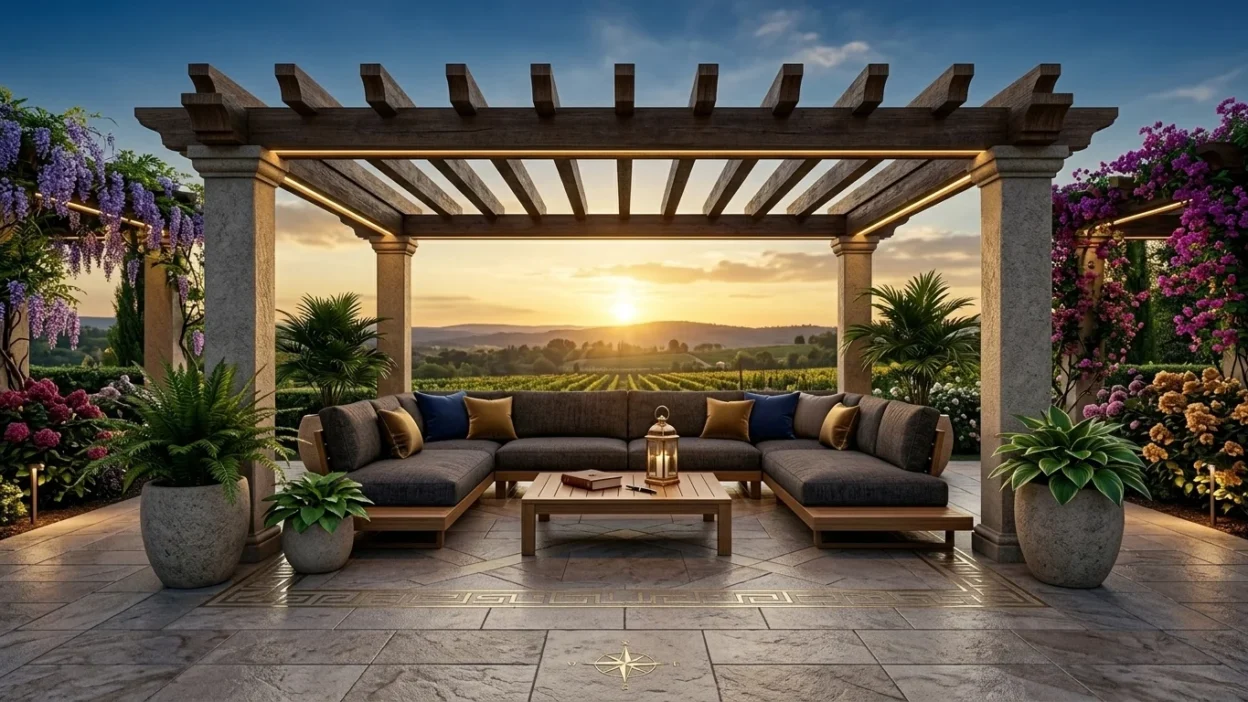
The word patio refers to an outdoor paved area next to a house or building where people relax, dine, or entertain guests. Patios are popular features in homes, restaurants, hotels, and gardens. Learning different synonyms for patio helps you describe outdoor spaces more accurately and makes your writing more engaging.
Whether you’re a student, an ESL learner, a writer, or a content creator, this guide explains the meaning of patio in simple English. You’ll also discover useful alternatives, their meanings, example sentences, and the best situations for using each one.
What Does “Patio” Mean?
Patio means a paved outdoor area connected to a house or building, often used for sitting, dining, or relaxing.
Simple Definition
Patio: An outdoor space with a hard surface where people gather or spend time.
Examples:
- We enjoyed dinner on the patio.
- The hotel has a beautiful patio overlooking the garden.
The best synonym depends on the size, design, and purpose of the outdoor area.
Why Learn Patio Synonyms?
Learning alternatives to patio helps you:
- Improve your English vocabulary.
- Avoid repeating the same word.
- Describe outdoor spaces more accurately.
- Write naturally and creatively.
- Enhance home, travel, and lifestyle writing.
• Terrace
Meaning: A raised outdoor area attached to a building.
Example: We had breakfast on the terrace.
Best usage context: Homes, hotels, and restaurants.
• Courtyard
Meaning: An enclosed outdoor area surrounded by buildings or walls.
Example: The hotel featured a peaceful courtyard.
Best usage context: Architecture and hospitality.
• Deck
Meaning: A raised wooden platform outside a house.
Example: They hosted a barbecue on the deck.
Best usage context: Residential homes.
• Veranda
Meaning: A roofed outdoor platform along the outside of a building.
Example: She relaxed on the veranda with a book.
Best usage context: Traditional homes and resorts.
• Porch
Meaning: A covered entrance area attached to a house.
Example: The children played on the front porch.
Best usage context: Everyday English.
• Balcony
Meaning: A platform projecting from the upper floor of a building.
Example: The apartment has a private balcony.
Best usage context: Apartments and hotels.
• Lanai
Meaning: A covered outdoor living space, especially in tropical regions.
Example: We enjoyed the evening on the lanai.
Best usage context: Tropical homes and resorts.
• Garden Terrace
Meaning: A patio surrounded by plants and flowers.
Example: Guests gathered on the garden terrace.
Best usage context: Gardens and outdoor venues.
• Outdoor Living Area
Meaning: A space designed for outdoor relaxation and entertainment.
Example: The outdoor living area included comfortable seating.
Best usage context: Real estate and home design.
• Sitting Area
Meaning: A place with seating for relaxation.
Example: The patio included a cozy sitting area.
Best usage context: Home décor.
• Plaza
Meaning: A large open public space.
Example: Visitors met in the central plaza.
Best usage context: Cities and public areas.
• Courtyard Garden
Meaning: A landscaped courtyard with plants.
Example: The courtyard garden offered a peaceful retreat.
Best usage context: Landscaping.
• Sun Deck
Meaning: An outdoor platform designed for enjoying sunshine.
Example: The hotel featured a spacious sun deck.
Best usage context: Resorts and pools.
• Garden Patio
Meaning: A patio located within or beside a garden.
Example: We enjoyed coffee on the garden patio.
Best usage context: Homes and landscaping.
• Outdoor Lounge
Meaning: A comfortable outdoor seating area.
Example: The outdoor lounge overlooked the lake.
Best usage context: Hotels and restaurants.
• Pavilion
Meaning: A covered outdoor structure used for gatherings.
Example: The wedding reception was held in the pavilion.
Best usage context: Parks and event venues.
• Arbor
Meaning: A garden structure covered with climbing plants.
Example: They placed a bench beneath the arbor.
Best usage context: Gardens.
• Pergola
Meaning: An open outdoor structure with supporting beams.
Example: The pergola provided shade on hot afternoons.
Best usage context: Landscaping and home design.
• Gazebo
Meaning: A freestanding covered outdoor shelter.
Example: Guests relaxed in the gazebo.
Best usage context: Parks and gardens.
• Loggia
Meaning: A covered outdoor corridor or gallery.
Example: The villa featured a beautiful loggia.
Best usage context: Classical architecture.
• Open-Air Space
Meaning: Any uncovered outdoor area.
Example: The restaurant offered an open-air space for diners.
Best usage context: General writing.
• Recreation Area
Meaning: A place designed for leisure activities.
Example: Families gathered in the recreation area.
Best usage context: Parks and communities.
• Outdoor Seating Area
Meaning: A space with tables and chairs outside.
Example: The café’s outdoor seating area was always busy.
Best usage context: Restaurants and cafés.
• Garden Court
Meaning: An outdoor court surrounded by landscaping.
Example: The resort’s garden court was beautifully maintained.
Best usage context: Hotels and luxury properties.
• Atrium
Meaning: An open central area inside or partially open to the sky.
Example: The building featured a bright atrium.
Best usage context: Architecture. (Not always an exact synonym.)
• Walkway
Meaning: A paved path through a garden or yard.
Example: Flowers lined the walkway to the patio.
Best usage context: Landscaping.
• Backyard Retreat
Meaning: A private outdoor relaxation space.
Example: They transformed the backyard into a peaceful retreat.
Best usage context: Home improvement.
• Outdoor Court
Meaning: A paved outdoor area for gathering or recreation.
Example: The outdoor court hosted community events.
Best usage context: Public spaces.
• Leisure Area
Meaning: A place designed for relaxation.
Example: The leisure area included shaded seating.
Best usage context: Hotels and parks.
• Alfresco Area
Meaning: An outdoor space used for dining or relaxing.
Example: Guests enjoyed lunch in the alfresco area.
Best usage context: Restaurants and outdoor living.
Comparison Guide: When to Use Different Synonyms
| Synonym | Best Used For | Tone |
|---|---|---|
| Terrace | Elevated outdoor spaces | Elegant |
| Courtyard | Enclosed outdoor areas | Formal |
| Deck | Wooden outdoor platforms | Casual |
| Porch | House entrances | Everyday |
| Veranda | Covered outdoor spaces | Classic |
| Balcony | Upper-floor outdoor platforms | Neutral |
| Pergola | Garden structures | Descriptive |
| Gazebo | Freestanding shelters | Scenic |
| Outdoor Lounge | Relaxation spaces | Modern |
| Alfresco Area | Outdoor dining | Professional |
How to Choose the Right Synonym
For Homes
Choose:
- Deck
- Porch
- Terrace
- Garden Patio
- Backyard Retreat
These fit residential properties.
For Hotels and Restaurants
Choose:
- Outdoor Lounge
- Alfresco Area
- Terrace
- Courtyard
- Outdoor Seating Area
These create a welcoming and professional tone.
For Gardens
Choose:
- Pergola
- Gazebo
- Arbor
- Garden Court
- Garden Terrace
These describe landscaped outdoor spaces.
For Architecture
Choose:
- Loggia
- Courtyard
- Atrium
- Veranda
- Pavilion
These are suitable for architectural descriptions.
For Everyday English
Choose:
- Patio
- Deck
- Porch
- Terrace
- Courtyard
These are common and easy to understand.
Common Mistakes When Using Patio Synonyms
Many learners think every outdoor space is a patio, but each term has a unique meaning.
Avoid these common mistakes:
- Using balcony instead of patio, since a balcony is attached to an upper floor.
- Confusing a deck with a patio, as decks are usually made of wood and raised above the ground.
- Using porch for an uncovered outdoor area, since porches are typically covered.
- Replacing courtyard with patio, even though courtyards are usually enclosed by buildings or walls.
- Assuming pergola and gazebo are patios, when they are outdoor structures rather than paved spaces.
Conclusion
Learning synonyms for patio helps you describe outdoor spaces with greater precision and variety. While patio is the most common term for a paved outdoor area, alternatives like terrace, courtyard, deck, veranda, and alfresco area suit different settings and architectural styles. Understanding these distinctions will improve your vocabulary and make your writing more descriptive, engaging, and natural.