
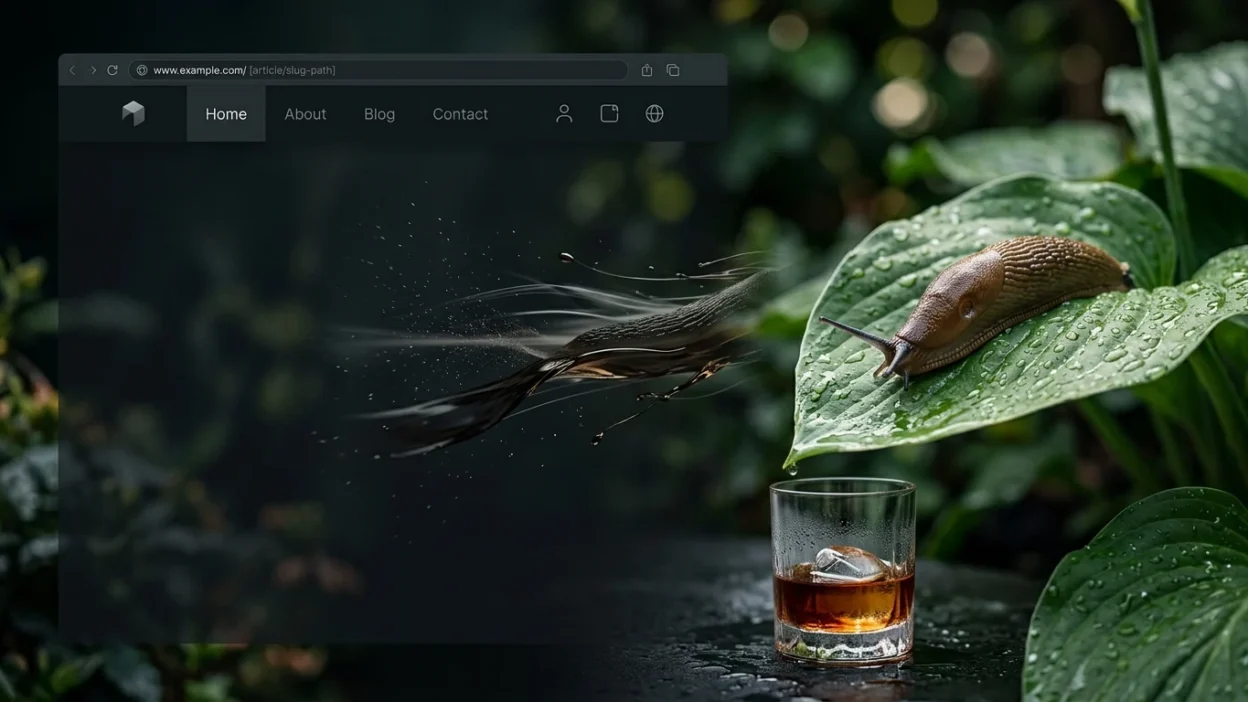
The word slug has several meanings in English. It can refer to a small, soft-bodied animal, a slow or lazy person, a heavy blow, a drink taken quickly, or a short piece of text used in publishing and web development.
Because its meaning changes with context, choosing the right synonym is important. This guide explains synonyms for slug in simple English, with examples and usage notes for students, ESL learners, writers, and content creators.
What Does “Slug” Mean?
Slug can describe different things depending on how it is used.
Examples:
- A slug crawled across the garden.
- The boxer landed a powerful slug.
- He took a slug of coffee.
- The article’s URL slug should be short and descriptive.
Why Learn Synonyms for Slug?
Learning alternatives to slug can help you:
- Understand different meanings of the word.
- Expand your English vocabulary.
- Improve creative and descriptive writing.
- Use more precise words.
- Understand publishing and digital terminology.
• Snail
Meaning: A small animal with a soft body, usually associated with a shell.
Example: A snail moved slowly across the garden.
Best usage context: Use when discussing similar garden creatures, although snails have shells and slugs do not.
• Gastropod
Meaning: A type of soft-bodied animal that includes slugs and snails.
Example: The researcher studied several species of gastropods.
Best usage context: Scientific and academic writing.
• Mollusk
Meaning: A soft-bodied animal belonging to the mollusk group.
Example: The slug is a common terrestrial mollusk.
Best usage context: Science and biology.
• Soft-Bodied Creature
Meaning: An animal with a soft body rather than a hard outer covering.
Example: The garden was home to several soft-bodied creatures.
Best usage context: General and descriptive writing.
• Invertebrate
Meaning: An animal that does not have a backbone.
Example: A slug is a small invertebrate commonly found in damp environments.
Best usage context: Science and education.
• Blow
Meaning: A strong physical hit.
Example: The fighter delivered a powerful blow.
Best usage context: Sports, boxing, and action writing.
• Punch
Meaning: A hit made with a closed hand.
Example: The boxer threw a hard punch.
Best usage context: Sports and everyday English.
• Strike
Meaning: A forceful hit or attack.
Example: The player delivered a powerful strike.
Best usage context: Sports, combat, and formal writing.
• Hit
Meaning: An act of striking something or someone.
Example: The ball received a strong hit.
Best usage context: Everyday English.
• Thump
Meaning: A heavy or forceful hit.
Example: He heard a loud thump from the other room.
Best usage context: Everyday and descriptive writing.
• Bash
Meaning: A hard or violent hit.
Example: He gave the door a strong bash.
Best usage context: Informal English.
• Swig
Meaning: A large drink taken quickly.
Example: He took a swig of water after running.
Best usage context: Informal English.
• Sip
Meaning: A small amount of liquid taken slowly.
Example: She took a sip of tea.
Best usage context: Everyday English.
• Mouthful
Meaning: An amount of food or drink that fits in your mouth.
Example: He took a mouthful of juice.
Best usage context: Everyday English.
• Draft
Meaning: A short drink of a beverage.
Example: He took a quick draft of water.
Best usage context: Less common; literary or regional contexts.
• Drink
Meaning: An amount of liquid consumed at one time.
Example: He took a quick drink of water.
Best usage context: Everyday English.
• Gulp
Meaning: A large amount of liquid swallowed quickly.
Example: She took a gulp of cold water.
Best usage context: Everyday and descriptive writing.
• Swallow
Meaning: To move food or liquid from the mouth into the throat.
Example: He swallowed a mouthful of water.
Best usage context: General English.
• Slowpoke
Meaning: A person or animal that moves very slowly.
Example: Come on, slowpoke—we’re going to be late!
Best usage context: Informal and playful English.
• Slacker
Meaning: A person who avoids work or does not make much effort.
Example: His coworkers complained that he was a slacker.
Best usage context: Informal English.
• Lazy Person
Meaning: Someone who does not like working or making an effort.
Example: He was unfairly described as a lazy person.
Best usage context: General English.
• Loafer
Meaning: A person who avoids work or spends time doing little.
Example: The manager did not want to employ a loafer.
Best usage context: Informal and somewhat negative contexts.
• Idler
Meaning: Someone who spends time without working or being productive.
Example: The old story described him as an idler.
Best usage context: Formal or literary writing.
• Sluggish Person
Meaning: Someone who moves or acts slowly.
Example: He seemed like a sluggish person in the early morning.
Best usage context: Descriptive writing.
• URL Slug
Meaning: The readable part of a web address that identifies a page.
Example: Keep the URL slug short and relevant to the article topic.
Best usage context: SEO, websites, and digital marketing.
• Permalink
Meaning: A permanent web address for a specific online page or piece of content.
Example: The article’s permalink was easy to share.
Best usage context: Websites and blogging.
• Identifier
Meaning: A name or code used to identify something.
Example: The page identifier helps the website organize its content.
Best usage context: Technology and web development.
• Label
Meaning: A word or name used to identify something.
Example: The editor created a simple label for the article.
Best usage context: Publishing and digital content.
• Headline Code
Meaning: A short identifying term used internally for a piece of content.
Example: The editor assigned a short code to the story.
Best usage context: Publishing and newsroom workflows.
Comparison Guide: When to Use Different Synonyms
| Meaning of “Slug” | Best Synonyms | Context |
|---|---|---|
| Garden animal | Gastropod, mollusk, invertebrate | Biology |
| Heavy hit | Blow, punch, strike, thump | Sports/action |
| Quick drink | Swig, gulp, drink | Informal |
| Slow person | Slowpoke, idler, loafer | Informal |
| Lazy person | Slacker, loafer, idler | Informal |
| Web address | URL slug, permalink, identifier | SEO/technology |
How to Choose the Right Synonym
• For the Animal
Choose:
- Gastropod
- Mollusk
- Invertebrate
- Soft-bodied creature
These are best when discussing biology or nature.
• For a Physical Hit
Choose:
- Blow
- Punch
- Strike
- Thump
- Bash
The choice depends on how strong or specific the hit is.
• For a Quick Drink
Choose:
- Swig
- Gulp
- Drink
- Sip
Use swig or gulp when the drink is taken quickly. Use sip when only a small amount is taken slowly.
• For a Slow or Lazy Person
Choose:
- Slowpoke
- Slacker
- Loafer
- Idler
These words can sound informal or negative, so use them carefully.
• For SEO and Websites
Choose:
- URL slug
- Permalink
- Identifier
- Label
In SEO, URL slug is the most precise term when referring to the portion of a web address that identifies a specific page.
Common Mistakes When Using Synonyms for Slug
The biggest mistake is assuming slug has only one meaning.
- A gastropod is a scientific term related to the animal.
- A punch specifically involves a fist.
- A swig means a large drink, while a sip is a small one.
- A slacker refers to someone who avoids effort, not simply someone who moves slowly.
- A URL slug is completely different from the animal or physical-hit meanings.
Final Thoughts
Understanding synonyms for slug requires looking at the context because the word has several unrelated meanings. For the animal, terms such as gastropod, mollusk, and invertebrate work well. For a physical hit, blow, punch, and strike are useful alternatives. Meanwhile, swig and gulp describe a quick drink, while URL slug belongs to SEO and web development.

Lawrence Dominic is an experienced SEO content writer and digital publishing professional specializing in creating informative, well-researched, and search-optimized articles. He combines in-depth research with strong editorial standards to produce engaging content across a wide range of topics. His writing focuses on accuracy, readability, and delivering meaningful value to readers. Lawrence is committed to publishing high-quality content that aligns with modern SEO best practices and evolving search trends.